
The implosion of a liquor storage tank at Nippon Dynawave mill, which killed several employees, raises urgent safety concerns as investigators continue to review.
LONGVIEW, Wash. — The questions haunting investigators at the Nippon Dynawave paper mill are the same ones that trouble Mickie Dearing: How does a tank that big simply implode — and why didn’t anyone see it coming?
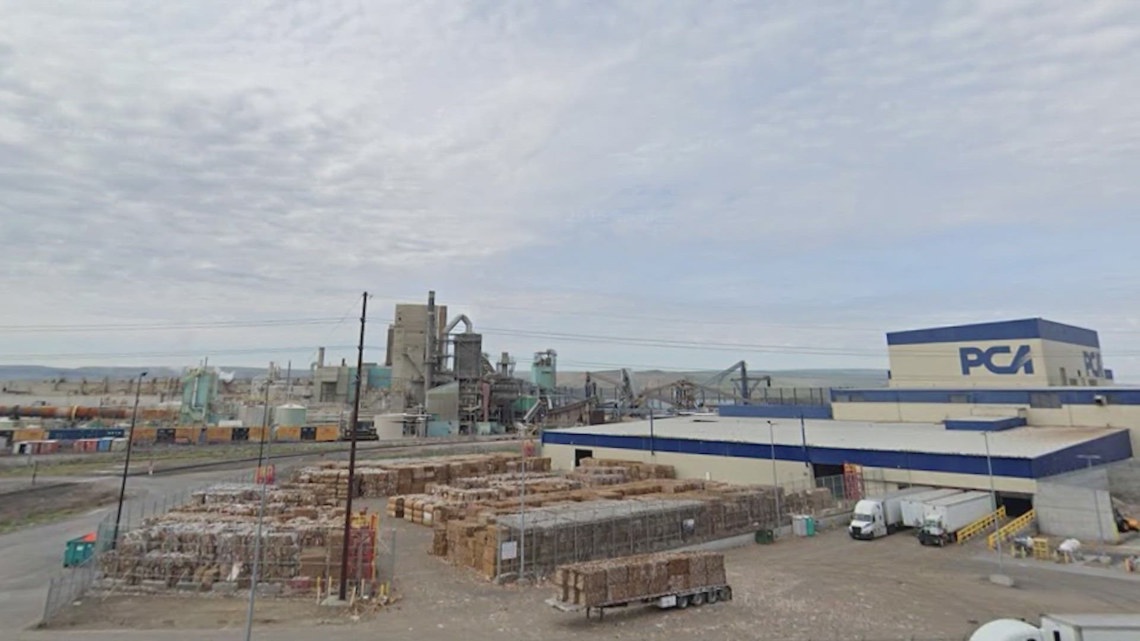
Dearing spent three years at the Packaging Corporation of America plant in the Tri-Cities area of central Washington, about 250 miles upriver from the site of Tuesday’s deadly incident on the banks of the Columbia River. He performed the exact same work of Kraft pulping that claimed the lives of multiple Nippon Dynawave employees, who died from chemical burns after the massive white liquor storage tank catastrophically failed.

“You’re dealing with hydrochloric acid, you’re dealing with sulfuric acid,” Dearing said. “It is dangerous. This stuff can eat your skin, melt your skin.”
Dearing was among roughly 200 workers laid off in February when PCA shut down Kraft pulping operations at its Tri-Cities plant. But when news of the Longview disaster broke, the accident hit him with a weight that went beyond the headlines.
“You work with these people. And you know the dangers. It’s unfortunate. I feel for the families,” Dearing said via a video call from his home in Kentucky where he lives.
“You work with these people. And you know the dangers. It’s unfortunate. I feel for the families.”
Like several industry experts who spoke with KING 5 but declined to appear on camera, Dearing called the implosion of a tank that size highly unusual and difficult to explain.
“For it to implode, it was hard for me to understand what happened,” he said. “Because it almost seems like there has to be some kind of suction that was created, like something was blocked that made it implode within itself.”
Dearing speculated that temperature fluctuations inside the tank, a stuck ventilation valve, a blocked flow line, or operator error could all be contributing factors. In kraft pulping operations, workers monitor the flow of caustic chemicals in and out of large storage systems — tracking volumes, pressures, and temperatures in a continuous loop.
“I don’t know if it was a temperature problem inside the tank. It could have been an operator error, because those guys control a lot with those tanks: the flows, how many gallons is going in, how many gallons is going out,” he said.
What troubles Dearing most is the apparent absence of warning. These systems are equipped with monitors and alarms, and tanks undergo regular cleaning and inspection schedules. He questioned how a dangerous pressure buildup or structural failure could go undetected long enough to cause a catastrophe.
“I don’t understand how there were not any warning signs — that there was a problem inside that tank,” he said.
Investigators are expected to examine whether a ventilation or flow valve became stuck, whether there was a structural weakness in the tank, or whether a maintenance lapse contributed to the implosion. The findings could have significant implications for safety standards at pulp mills across the Pacific Northwest.
The Nippon Dynawave plant in Longview has not issued a public statement on the cause of the accident. State and federal workplace safety investigators have opened inquiries into the incident.